Clarity designs night worker assessment programmes around the way your organisation actually runs shifts, rosters and worker groups, rather than forcing a rigid one-size-fits-all process. This makes compliance easier to sustain across large teams, high-turnover roles and multi-site operations.
We help employers run night worker medicals with minimal disruption by using structured questionnaires, clinician review and escalated consultations only where necessary. This reduces unnecessary appointments while still giving you the oversight and support needed for a defensible programme.
Our reporting gives employers a straightforward view of whether an employee is fit for night work, whether adjustments should be considered, and when additional clinical input may be needed. That supports consistent decision-making, record-keeping and audit readiness.
Night worker assessments can sit alongside management referrals, safety-critical medicals and wider health surveillance, giving you a more coherent and cost-effective occupational health approach for roles that operate around the clock.
A good night worker assessment should look at more than whether a form has been completed. It should consider the health factors most likely to be affected by night working, including sleep quality, fatigue, existing medical conditions, medication, lifestyle factors and whether the worker is experiencing health problems that may be linked to their pattern of work.
Depending on the case, assessments may include:
A health questionnaire covering current health, relevant history and treatment.
Review of sleep, fatigue and adaptation to shift work.
Consideration of conditions that may be affected by night work, such as diabetes or epilepsy.
Escalation to occupational health clinician review where a questionnaire highlights concern.
Advice on adjustments, monitoring or alternative work where appropriate.


Employers must offer health assessments to night workers before they begin night work and continue offering them regularly throughout employment, although workers do not have to accept them. Employers must also keep confidential records of the assessments, or at least the dates they were offered if declined, for two years.
If a health professional confirms that night working is affecting a worker’s health, the employer must find suitable alternative work where possible. That makes the quality of the assessment process important not just for compliance, but for managing people fairly and reducing operational risk
For night worker medicals, employers need a partner who will challenge, innovate and stay accountable where workforce wellbeing and legal compliance intersect.
We challenge processes that treat night worker assessments as a tick-box exercise, and help employers build programmes that reflect real shift risks and workforce needs.
We innovate in how assessments are delivered, using efficient triage, clinician review and practical scheduling so compliance does not become an administrative burden.
We grow by helping clients improve how they manage fatigue, fitness and long-term resilience across shift-based teams.
We are driven to deliver with responsive support, clear communication and reliable follow-through from offer records to clinical advice.
Collaboration drives us forward as we work with HR, H&S and operational leaders to make night worker programmes workable in real environments.
We are energised by health and accountable to each other, bringing consistency and care to decisions that affect both employee wellbeing and operational continuity.
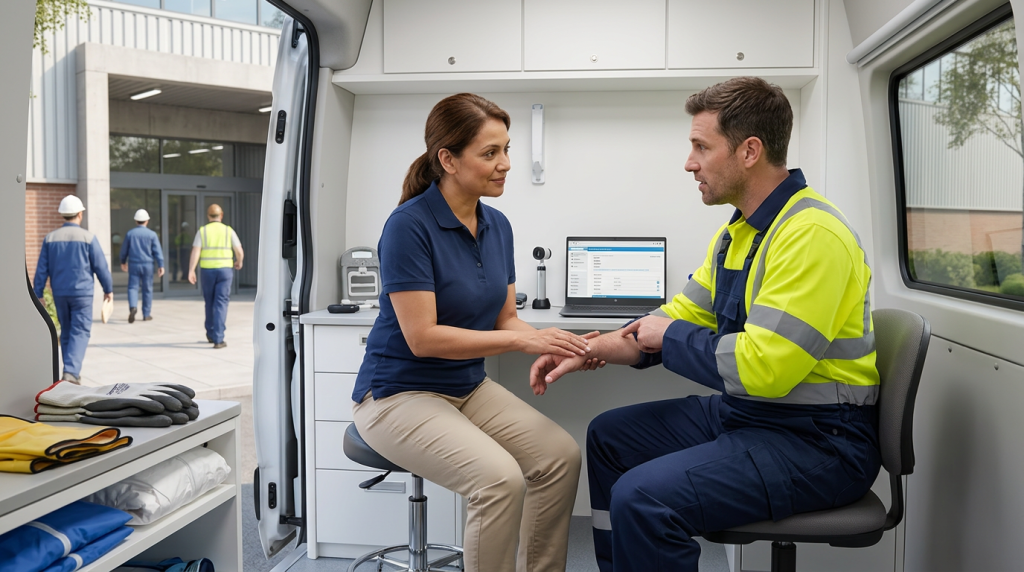
If your business relies on shift work or overnight operations, Clarity can help you design and deliver a night worker medical assessment programme that supports compliance, protects staff health and fits around the way your teams actually work.

 Telephone
 Email
Email